
How To Input Paystub In Quicken For Mac

Quicken is a popular personal finance software, but it’s designed strictly for Windows users. If you use Mac, Quicken is not an option. But that’s where Banktivity comes into the picture. Banktivity is one of a few native Mac applications in this list of Quicken alternatives, so read carefully Mac lovers – Banktivity syncs to your iPhone, iPad, and even Apple Watch, meaning you can easily take this budgeting app anywhere you go. If you are not a Bill Pay user in Quicken, your conversion is complete. Re-create your payments. If you need help creating your payments, click on Help in the top menu. Search for “Adding online Bill Pay transactions” and click that item. Follow the instructions to enter or transmit an online payment.
- Quicken offers tiered pricing options based on the features you use, as well as the product you choose. Quicken, like many other personal finance software applications, has shifted to a subscription model. You pay every year. Quicken for PC: Minimum = $34.99, Maximum = $99.99; Quicken for Mac: Minimum = $34.99, Maximum = $74.99.
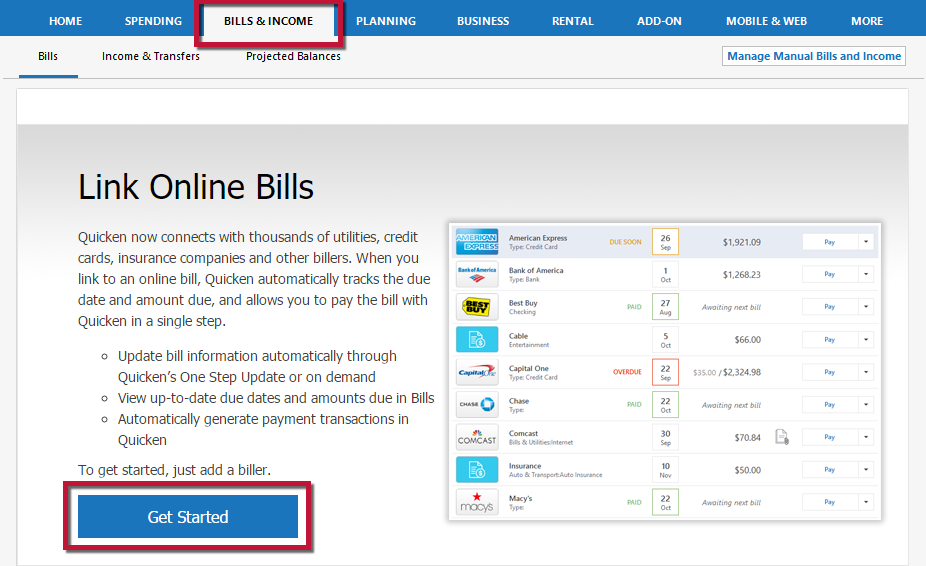
- Account to Quicken. You can verify if bill pay. is setup for the account. Go to Settings in the bottom right of the Quicken screen. The Connection Settings screen appears. Ensure that the connection type is Direct Connect and Bill Pay is turned on.
When Apple launched the Apple Card, it came without any way to export your transactions such that you could import the data into a personal finance app—all you could get out was a PDF. Apple started to rectify that glaring lapse at the beginning of the year by adding the capability to export transaction data in CSV (Comma Separated Values) format (see “Apple Card (Finally) Gains CSV Statement Export,” 23 January 2020).
However, CSV format wasn’t sufficient for many personal finance apps. In February 2020, Apple added support for OFX (Open Financial Exchange) format. It was a somewhat troubled release, with TidBITS Talk participants trading tips on how to edit exported files to get them to import properly into various apps. Apple worked out the kinks over the next few months, and the complaints died down.
Now Apple has extended the formats available to Apple Card users even further by adding support for Quicken’s proprietary QFX (Quicken Financial Exchange) format, which is an extension of OFX, and the QBO format used by Intuit’s QuickBooks. Here’s how you export those formats:
- Open the Wallet app on your iPhone.
- Tap your card balance.
- Under Statements, tap the desired month.
- Tap Export Transactions.
- Choose either Quicken Financial Exchange or QuickBooks. Comma Separated Values and Open Financial Exchange are still options.
- Choose the destination from the share sheet. The easiest ways to get them to your Mac are probably AirDrop (your Mac might be an AirDrop shortcut at the top of the share sheet), which will send the exported file to your `~/Downloads` folder, or Save to Files (pick a location in iCloud Drive).
For something that’s human-readable, you can still download your statement as a PDF. In Step 4 above, instead of tapping Export Transactions, tap Download PDF Statement.
Here’s how you can use the various formats Apple Card can now export:
- QFX: Import into Quicken by choosing File > Import > Bank or Brokerage File.
- QBO: In QuickBooks, choose File > Utilities > Import and then Web Connect Files.
- OFX: Import into any app that supports this format, like Banktivity, Moneydance, and You Need a Budget.
- CSV: Open in any spreadsheet or import into an app that supports CSV import and lets you map import fields appropriately.
- PDF: File for later reference or print; it’s not structured data that you can import.
If anyone has figured out how to automate this process with Shortcuts, let us know!
Now if only Apple would let multiple people in a family share an Apple Card. Other common requests include the capability to download transaction data without waiting for a statement and support for other countries. How else would you like to see Apple improve the Apple Card experience?
When Apple launched the Apple Card, it came without any way to export your transactions such that you could import the data into a personal finance app—all you could get out was a PDF. Apple started to rectify that glaring lapse at the beginning of the year by adding the capability to export transaction data in CSV (Comma Separated Values) format (see “Apple Card (Finally) Gains CSV Statement Export,” 23 January 2020).
However, CSV format wasn’t sufficient for many personal finance apps. In February 2020, Apple added support for OFX (Open Financial Exchange) format. It was a somewhat troubled release, with TidBITS Talk participants trading tips on how to edit exported files to get them to import properly into various apps. Apple worked out the kinks over the next few months, and the complaints died down.
Now Apple has extended the formats available to Apple Card users even further by adding support for Quicken’s proprietary QFX (Quicken Financial Exchange) format, which is an extension of OFX, and the QBO format used by Intuit’s QuickBooks. Here’s how you export those formats:
- Open the Wallet app on your iPhone.
- Tap your card balance.
- Under Statements, tap the desired month.
- Tap Export Transactions.
- Choose either Quicken Financial Exchange or QuickBooks. Comma Separated Values and Open Financial Exchange are still options.
- Choose the destination from the share sheet. The easiest ways to get them to your Mac are probably AirDrop (your Mac might be an AirDrop shortcut at the top of the share sheet), which will send the exported file to your `~/Downloads` folder, or Save to Files (pick a location in iCloud Drive).
For something that’s human-readable, you can still download your statement as a PDF. In Step 4 above, instead of tapping Export Transactions, tap Download PDF Statement.
Here’s how you can use the various formats Apple Card can now export:
- QFX: Import into Quicken by choosing File > Import > Bank or Brokerage File.
- QBO: In QuickBooks, choose File > Utilities > Import and then Web Connect Files.
- OFX: Import into any app that supports this format, like Banktivity, Moneydance, and You Need a Budget.
- CSV: Open in any spreadsheet or import into an app that supports CSV import and lets you map import fields appropriately.
- PDF: File for later reference or print; it’s not structured data that you can import.
If anyone has figured out how to automate this process with Shortcuts, let us know!
How To Input Pay Stub In Quicken For Mac Free
Now if only Apple would let multiple people in a family share an Apple Card. Other common requests include the capability to download transaction data without waiting for a statement and support for other countries. How else would you like to see Apple improve the Apple Card experience?