
Best Adobe Photoshop Software For Mac

- Best Adobe Photoshop Software For Mac Os
- Best Adobe Photoshop Software For Mac Download
- Best Adobe Photoshop Software For Mac Cracked
- Best Adobe Photoshop Software For Mac Windows 10
Post-processing astrophotography images is mandatory: you cannot avoid it. It can be a fairly long and technical process, but it is necessary to squeeze out the most you can from your images.
Adobe Photoshop Elements is a raster graphics editor for entry-level users. For this, it has most of the features available in the professional version, but in a simplified manner. The app can create collages, slide shows, calendars, scrapbook pages, and cards. Adobe's Photoshop Lightroom remains the gold standard in pro photo workflow software. It's a complete package, with top-notch organization tools, state of-the-art adjustments, and all the output.
Everything begins with pre-processing your images, a step including image calibration and image stacking, which we have already covered in this article.
Brief Overview of Adobe Photoshop CC 2019 for Mac OS X. Adobe Photoshop CC 2019 for Mac OS X is an imposing as well as comprehensive image editing application that has been equipped with loads of image manipulation tools designed to let you retouch the photos easily and with utmost accuracy. Welcome to Adobe Photoshop 2019 for Mac OS. Photoshop isn’t an image-creation program, which suggests that it isn’t acknowledged to form images from scratch. Instead, Photoshop is supposed to vary and improve existing images that are acquired through photography, scanners, or other means. Lightroom Classic is a paid app for Windows and Mac and has a trial version available. Adobe Photoshop. Adobe Photoshop is the gold standard of image editing apps, and one of its numerous features is that it can stitch panoramas.
After that, it is time to post-process your stacked image with your software of choice. In this article, we will discuss the different options that are available to post-process your astrophotography images.
Note: Don’t miss the detailed video at the end of this article, It was created to help show you how to process your images with some of the software mentioned in this article.
Click here to skip to our Image Processing Demo Video.
What Does Post-Processing Mean In Astrophotography?
In astrophotography, the post-processing includes steps that are crucial to the quality of the final image. Those steps can be summarized as:
- Histogram stretching
- Gradients and light pollution removal
- Stars color calibration
- Stars reduction and Stars removal
- Sharpening and noise reduction
- Final tweaks
Of the steps mentioned above, it is worth to spend a few words on the Histogram Stretching, as it is of utmost importance in deep-sky astrophotography.
What Histogram Stretching Is And Why You Need It
With image stacking, you have combined all your light frames (the actual images of the sky) into a single image with an enhanced signal-to-noise ratio.
With deep sky astrophotography, this stacked image can be surprisingly dark, with only a few bright stars visible.
There is nothing wrong with it, as all the details and information are there, but hidden in the dark background. And this is why this process also goes under the name of background extraction.
Histogram stretching can be done manually using Adobe Photoshop or in automatic/semi-automatic way using astrophotography software such as Astro Pixel Processor, Star Tools, or His Majesty PixInsight.
A rigorous explanation on how digital data are recorded and how the histogram works can become fairly technical and is beyond the scope of this article.
To keep it simple, let’s say that when you perform the stretching of the histogram, you are broadening the histogram. Thus pushing details that were crammed in the blacks towards the middle tones.
And you do that slowly, in small steps, to ensure retaining the best possible image quality.
The process allows us to take full advantage of the image stacking process, and it results in a cleaner, brighter image with a lot of details that were not visible (or barely visible) in the single exposures.
Stars Reduction / Stars Removal
Star reduction is another process that is standard when editing deep-sky astrophotography.
While it seems odd that you want to shrink or remove stars from a photo about stars, this process aims to make the multitude of visible stars in the image less imposing and distracting.
By reducing enlarged stars due to the histogram stretching and by removing the smallest stars, you make the deep sky objects in the image more visible, as shown in the image below.
The procedure is particularly useful when shooting deep-sky objects, such as nebulae, that are in the Milky Way Band.
Software For Astrophotography Post-Processing
We can group the software for astrophotography post-processing in two categories:
- generic photo editors, such as Photoshop, Gimp, Affinity Photo, etc.
- Astrophotography editors, such as StarTools, Nebulosity, Astro Pixel Processor, Pixinsight, etc.
The main advantage of generic photo editors over specific astrophotography editors is versatility.
With a generic photo editor, it is easy to post-process all kinds of astrophotography, from deep-sky imaging to lunar and planetary shots, passing for star trails and starry landscapes.
In this article, for example, we discussed how to stack starry landscape images in Photoshop.
Not many astrophotography editors are this flexible.
Here is a list of software that are most commonly used to post-process astrophotography images.
Adobe Lightroom CC
Generic Photo Editor | Commercial From $9.99 Subscription Plan | Windows, Mac OS X, IOS
Pros
- Easy to use
- Powerful image development and image organizer
- Easy integration with Photoshop
- Can use photographic plugins
Cons
- Can’t do the complex editing needed for astrophotography (histogram stretching, Stars Reduction, etc)
- Limited to cosmetic tweaks
Adobe Lightroom is a popular, easy to use and fairly powerful RAW developer and image organizer.
Its usefulness in astrophotography is somewhat limited, as you cannot perform complex tasks such as histogram stretching, advanced light pollution, and gradient removal, star reduction, etc.
On the other hand, it is a terrific editor for the final cosmetic tweaks to your image and to organize them in collections, per tag, and location. Lightroom is also great for color proofing your images before printing them.
If you are subscribing to the Adobe Photography Plan, you also have Photoshop CC included for free. And here is where things get interesting.
To get the best from the two worlds, load your stacked images in Lightroom, organize them in collections, and call Photoshop from within Lightroom for the astro-specific editing (histogram stretching, etc.).
Then make the final tweaks in Lightroom.
Adobe Photoshop CC
Generic Photo Editor | Commercial From $9.99 Subscription Plan | Windows, Mac OS X, IOS
Pros
- Versatile and Powerful Photo Editor / Image Manipulation Software
- Suitable for deep sky and planetary astrophotography as well as star trails and starry landscapes
- Astrophotography Action Sets and Plugins Available
- Subscription Plan with Photography Bundle
Cons
- Lacks Some Advanced Features for Astrophotography
Photoshop is one of the most commonly used software in the field of photography editing and image manipulation, and it can be used to post-process astrophotography work.
If you are a beginner astrophotographer, you are on a tight budget or you already own Photoshop, you should give it a try as all the basic post-processing steps can be performed in this software.
If you need more advanced features, you can also expand Photoshop capabilities thanks to many astrophotography related Action Sets, Plugins, and Panels.
Finally, with Camera Raw filter and other photographic plugins (like for smart sharpening and advance noise reduction), you can perform with ease all the final tweaks an image may need.
As a Photoshop user, I tried many plugins and action sets for astrophotography, and here is my must-have extensions list.
Astronomy Tools by ProDigital
Actions Pack For Deep Sky Astrophotography| Commercial $21.95 | Windows, Mac OS X
A rich set of actions suitable for post-processing astrophotography images. The set includes actions such as star reduction, enhanced DSO, light pollution and color gradient removal, sharpening, and noise reduction.
Photokemi’s Star Tools by Ken Mitchel
Actions Pack For Deep Sky Astrophotography | Commercial $14.95 | Windows, Mac OSX
Similarly to Astronomy Tools, this action set is most useful for deep space astrophotography.
It offers advanced star removal and star reducing actions, semi-automatic histogram stretching, different sharpening and noise reduction actions, as well as actions such as nebula filters and star color enhancement.
There is also a set of extra actions, available for $6.95.
GradientXterminator by Russell Croman
Plugin For Deep Sky Astrophotography | Commercial $49.95 | Windows, Mac OS X
This plugin is a gradient removal tool that is easy to use and extremely effective. Despite a rather steep price (a trial is available for you to test the plugin), this is a terrific add-on for Photoshop, if you are serious about deep-sky astrophotography.
Hasta La Vista Green! (HLVG) by Regelio Bernard Andreo
Plugin For Deep Sky Astrophotography | Donationware | Windows
Despite its old age, this plugin is still useful, and it does an excellent job of removing green noise and the green casts such noise may cause in some images.
Astro Panel By Angelo Perrone
Panel For Starry Landscape And Deep Sky Astrophotography | Commercial | Windows, Mac OS X
Astro Panel consists of a rich set of functions and methods that produce high quality starry landscapes and Milky Way images.
It is also easy to process Deep Sky Photos thanks to advanced functions for reducing digital noise and hot-pixels, eliminating the gradient, managing artificial flat, and much more …
Furthermore, astronomical images aside, you can use the Astro Panel to edit classic landscape images too.
Affinity Photo
Generic Photo Editor | Commercial $49.99 | Windows, Mac OS X, IOS ($19.99)
Pros
- Affordable
- Powerful
- The interface and commands are similar to Photoshop for an easy switch
- Suitable for deep sky and planetary astrophotography as well as star trails and starry landscapes
Cons
- Lacks third-party actions sets, plugins and panels
Affinity Photo from Serif Lab is a great, affordable alternative to Photoshop, and you do not need to pay for a subscription plan.
With Affinity Photo, you can carry out with ease all of the basic astrophotography post-processing.
But since there are no plugins, action sets, and panels to help you out, you have to learn to do things manually, even the more advanced tasks such as star reduction.
Gimp
Photo Editor | Freeware | Windows, Mac OS X, Linux
Pros
- Freeware
- Great community and lot of info available
- Powerful
- Suitable for deep sky and planetary astrophotography as well as star trails and starry landscapes
Cons
- Interface a bit confused
- Lacks third-party actions sets, plugins and panels
Gimp is the historical freeware alternative to Photoshop. Since it is freeware and on the market for many years, there is a big community of users, so it is easy to find relevant tutorials and guides to help you out.
The software has a slightly confusing interface, particularly if you are trying to switch from Photoshop, but it is powerful enough to let you edit your astrophotography images with ease.
Unfortunately, there are no third-party action sets, plugins, or panels to help you automate some tasks. As with Affinity Photo, you have to learn how to do everything manually.
Star Tools
Astrophotography Post-Processing Tools | Commercial $45 | Windows, Mac OS X, Linux
Pros
- Affordable
- Multiplatform
- Offers many advanced tools
- Trial without time limit
Cons
- Interface bit confusing
- Convoluted workflow
- Slower than other software
StarTools is a deep-sky post-process editor that does everything you need except the initial light frame calibration and stacking.
Once you have the stacked image from, say, Deep Sky Stacker, you can post-process it in StarTools, taking advantage of the many tools the software has to offer.
The interface is a bit confusing, and it may take a while to get used to the convoluted editing workflow.
Fortunately, the trial version never expires, so you can take all the time you need to experiment with StarTools before deciding if it is for you or not. The only limitation of the trial is that you cannot save your results.
SiriL
Multipurpose Astrophotography Editor | Freeware | Windows, Mac OS X, Linux
Pros
- Freeware
- Multiplatform
- Active Development
- Suitable for different kinds of astrophotography
- Fairly easy to use
- Powerful full-grown astrophotography software
Cons
- Develop the image is a lengthy process
- Interface a bit confused
I’m no expert with SiriL, but it is probably the only full-grown astrophotography editor that is freeware and multiplatform.
Siril will allow you to perform all the essential steps in your astrophotography editing workflow, from image calibration and stacking to (manual or auto) histogram stretching and post-processing.
Since it is free, if you are looking for an astrophotography package, SirilL is worth downloading and having a go with it.
Nebulosity
Deep Sky Astrophotography Editor | Commercial $95 | Windows, Mac OS X
Pros
- Capable full astrophotography editor
- Can calibrate and stack your images
- It offers many advanced tools
Cons
- Not abandonware, but development is somehow slow
- The interface feels old and not very user friendly
Nebulosity 4 was my first software specific to astrophotography. It is intended for deep sky astrophotography and is fairly easy to use.
It offers a good way to calibrate and stack your images, and you can use it for stretching the histogram, tighten the stars, calibrate the background colors, and perform sharpening and noise reduction.
But the interface is not as intuitive, it looks “old,” and while development is there, it is not as quick compared with other software.
Astro Pixel Processor
Deep Sky Astrophotography Editor | Commercial €60/Yr (Renter’s License) Or €150 (Owner’s Renter) | Windows, Mac OS X, Linux
Pro
- Great deep sky astrophotography package
- Powerful
- Easy to use
- Batch processing
- 30-days free trial available
- Suitable for creating stunning mosaic with ease
- Active development
- Rental license available
Cons
- Vignetting removal tool could be better
- No Stars Reduction methods available
Astro Pixel Processor is my goto software for my deep sky astrophotography and I decided to go with the renter’s license to always work with the latest version of the software.
The interface is easy to navigate, options are explained by text messages that appear when you hover on the options with the mouse, and the different tabs are numbered.
This means that there is no guessing in establishing the best workflow: just follow the numbers from 1 to 6 and jump at the tab number 9 for post-processing the stacked image.
You can run all the steps once at a time or set them up and run all with a batch processing: this way, you can do other stuff while the software calibrates and stacks your images.
If you are looking for a way to edit your deep-sky images and create mosaics, I vouch for Astro Pixel Processor.
PixInsight
Multipurpose Astrophotography Editor | Commercial €230+VAT | Windows, Mac OS X, Linux
Pros
- The best and most complete astrophotography editor on the market
- Multiplatform
- Suitable for Planetary and Deep-Sky astrophotography
- 45-days free trial available
Cons
- Expensive
- Extremely steep learning curve
- Requires a powerful computer to run smoothly and conveniently fast
I will be honest with you: I requested a trial (and it was granted twice), but both times I ran away from PixInsight screaming in despair.
Not that PixInsight is bad or lacks crucial functions, but because it is very complicated to use for beginners and the learning curve is very steep.
Granted, PixInsight, being the software of refinement for the category, there are tons of tutorials and guides online (Light Vortex Astronomy has some of the best ones and are free). But you need to spend a lot of time in front of your computer, particularly if you have an old one.
But if you can master it, you will be rewarded with Pro-grade deep sky astrophotography images.
A Comprehensive Video About Post-Processing
In this video, I show you how to post-process a deep sky image using some of the software discussed in this article.
While it is not a complete tutorial in post-processing deep sky images, it gives you a feeling of how easy (or not) is to use those software and where they differ.
Conclusions
Stacking astrophotography images is only the first step in the lengthy astrophotography editing process. In this article, we have discussed the different software that is available to post-process the stacked image to obtain a compelling image of the night sky.
Some are free, some are commercial, some are specific to deep sky astrophotography while others are generic photography editors, and they all have their pros and cons.
This guide will help you to decide which software is best for you.
Personally, I am a fan of Astro Pixel Processor for deep sky astrophotography, as it is powerful and easy to use, and of Photoshop for its flexibility.
Digital art software gets better and better each year.
The right software can help you paint faster and feel better about your artwork. Each program handles brush strokes and color blending differently, and the price tags vary from expensive to free.
Adobe Photoshop still reigns supreme as an all-round industry standard for digital artists. Yet there’s always new software coming out to compete against Adobe’s throne.
Choosing your art software is no longer about the biggest features, but rather finding an application that suits your specific needs as an artist.
Beginners who just want to practice are better off choosing a free program compared to professionals who want to learn software for an industry job. If your goal is to work for a game studio as a concept artist then you’ll probably have a different set of goals.
In this post we’ll take an in-depth look at 7 of the most popular programs for digital drawing & painting by comparing their features and seeing how they stack up.
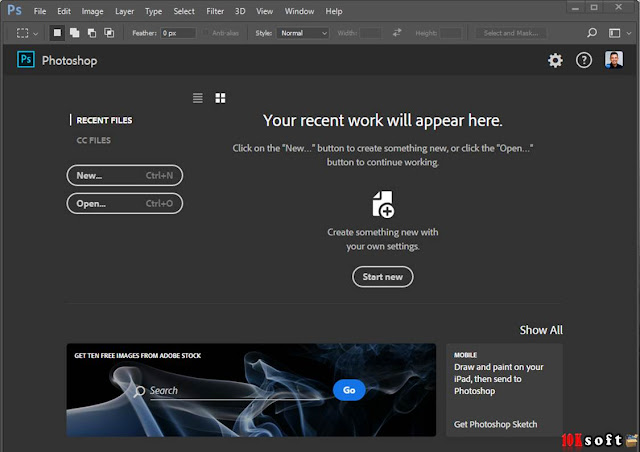
But if you’re in a hurry here’s a quick overview to help you decide:
- Professional Choice: Adobe Photoshop
- Free Choice: Krita
- Budget Choice: Clip Studio Paint
If you need a bit more info on these programs just keep reading.
Adobe Photoshop
Price: $9.99/mo
Platforms: Mac, Windows
Adobe Photoshop is the most popular and widely used software for digital art.
It’s feature-heavy, regularly updated, and you can use it to create everything from concept thumbnails to comic book pages or even photobashed pieces.
Photoshop started as an image-editing program for photographers. Over time it slowly became a staple for many other industries, digital art included.
With this software you have a huge variety of painting tools, brushes, filters, plugins, and layer styles.
It’s an industry standard for all digital artists across the entertainment industry because it just works. If you want a career in video games, animation, feature films, or any general production studio, knowledge of Photoshop goes a long way.
The learning curve is pretty steep here. If you are a beginner you may feel overwhelmed by all the options and get lost in technical aspects of the program. But once you’ve learned the basics, your imagination is the limit!
You can do anything in whatever style you choose and edit photos to boot!
Being the most popular software for creatives artists, there’s a mass of Photoshop tutorials available online. Adobe even released a series of up-to-date free tutorials which will take you from beginner to expert level.
If you ever have a problem or question on anything, a quick Google search will get you a video answer or helpful forum post.
Concept artists like Photoshop’s custom brushes and often create their own. Detailed layer settings, regular updates, and a sleek user interface are the driving force behind Photoshop’s continued popularity.
You can rotate your canvas naturally to mimic the rotation of paper. And you can setup grids and rulers for complex scenes, or even bring in 3D objects to paint over. PSD files(Photoshop’s native file format) play well with other Adobe programs and this file type is an industry standard.
That means you can import PSDs into almost any other art software without a hitch. GIMP and Krita both accept PSD files along with many other programs.
This is why many artists combine Photoshop with other painting software. Depending on the workflow you’re going for you could do your concept and lineart in something like Clip Studio Paint, then bring it to Photoshop for coloring and final touch-ups.
Other digital art software doesn’t try to replace Photoshop but instead tries to improve on the interface for specific types of art(ex: comics, storyboards, environment paintings, etc).
Once you’ve signed up for a Creative Cloud membership you get a free, non-conditional seven-day trial version of Photoshop. This offer applies to Adobe’s other software as well. If you like Photoshop and want to buy it, there are four purchase plans to choose from.
The cheapest is the Photographers package which is $9.99(only available annually) and it includes Lightroom CC. If you want to buy a monthly plan you can get Photoshop for $29.99 a month.
If you want to go the extra mile and get the rest of Adobe’s software, the entire suite costs $74.99 monthly(or annual for $49.99 p/m).
Bonus Tip: Students 13 years and older get a 60% discount on the full Adobe suite plan!
People love Photoshop for its versatility and wealth of free knowledge online. Adobe has thrown millions of dollars into development so Photoshop isn’t going anywhere.
It’s a solid, professional choice for aspiring digital artists and concept artists.
Corel Painter
Price: $350
Platforms: Mac, Windows
Corel Painter is characterized by painterly brush strokes and a traditional artist’s feel to the interface.
Painter is for artists who love loose, messy brushwork and want to capture the beauty of traditional mediums on a digital canvas. It comes standard with 900 brushes covering every possible situation you could imagine.
As you might guess from the name, Corel Painter is focused on painting. But this should be great for artists who only want software to draw or paint digitally.
It has a 2.5D brush toolset that mimics real-world brushes giving you full control over the final “style” of your work.
Painter has been a serious alternative to Photoshop for several years and is the company always listens to user requests. They’ve been working hard to add new features every year and have added a bunch of artist-suggested tools into their latest release.
For example, some users complained of UI sensitivity and slow response times. Those issues were fixed with the 2019 version along with an entire UI design overhaul.
Icons were redesigned to be more intuitive and the interface was changed to a darker theme.
Among all the new features with that version, the most celebrated was the pinned color wheel.
You can position the color wheel wherever you like on the screen giving an instant look at color options without swatches. This spectral feature means you can work in detail without the circular brush icon obscuring your view.
In Painter’s web series “Paint like Bob Ross” you can learn how to paint digital landscapes in 30 minutes using their brushes—a great introduction to conceptualizing landscapes for beginners.
The software is feature heavy and beginners might still feel overwhelmed by the sheer number of brush options and settings. But Corel is worth learning because it is another trusted industry staple among character designers, concept artists, and visual development artists.
Corel Painter has been around since 1992 and you can find an extensive library of free tutorials on their website. Or if you search on YouTube I’m sure you can find plenty of free tutorials there as well.
You won’t find as many resources compared to Photoshop. But Corel Painter is still a beast in the concept art world, or just the digital painting world in general, making it an awesome choice for hobbyists or newbies just picking up digital art for the first time.
As of this writing, a brand new copy of Corel Painter costs $350 making it an expensive once-off purchase. Although you can get a free 30-day trial to demo the software and see if it’s right for you.
Krita
Price: Free
Platforms: Mac, Windows, Linux
Krita is a free open source digital painting program designed for cartoonists, illustrators, concept artists, and pretty much all digital artists.
The software was initially developed as a general image editing competitor to Photoshop but focused their efforts on digital painting starting in 2009. The Krita community donates monthly to the software efforts helping it to stay free and funding development of new features
If you have a background in some other digital art software(Photoshop for example) then Krita’s tools will be a little familiar and a little not-so-familiar.
Whether you’re switching or just getting into Krita it’s worth the time to watch a few tutorials to find out how everything works.
Krita hasn’t released many official tutorial videos but they have created detailed documentation online. If it’s your first venture into digital art then start off learning about the basic UI and toolsets.
Use the pop-up pallet to select your brushes, erasers, and colors intuitively. All other tools are stored in the panels to the left and right. Krita supports PSD files so that you can switch between Photoshop and Krita with ease.
And there’s a ton of freebies online like free brush packs that mimic everything from charcoal to watercolors and so much more. The beauty of Krita is the free price tag and the immensely supportive community around this software.
Krita has been criticized by some professional artists for its lag, seemingly unintuitive design, and uneven brush softness. Although the criticism has merit, the program’s core features work well and you will learn them with practice.
Also worth noting this has to be the absolute best choice for anyone on a Linux machine. Photoshop does not support Linux outside of a virtual emulator but Krita can run natively in any Linux distro.
This is a huge +1 for Krita since it’s really the best digital painting alternative for our Linux & Unix friends.
If you don’t have the cash to burn on digital art programs Krita is the perfect choice.
Use the program while you save up some money to grab another program. Or just stick with Krita and use it free for life! Many professional artists like David Revoy create all of their work with Krita and their stuff looks amazing.
Best thing about Krita is that it’s simple for beginners to learn and it doesn’t confuse you with a ton features or fancy tools. Krita’s purpose is digital painting and that’s precisely what it does well.
Clip Studio Paint
Price: $49
Platforms: Mac, Windows
Clip Studio Paint is the most popular software for creating comics and manga artwork.
Clip Studio Paint was originally named Manga Studio but changed names in 2013. It originated in Japan as specialist software for manga, illustration, and animators.
The program has long been a worldwide affordable alternative to Photoshop for digital artists but got more recognition with the name change.
The most notable drawing difference between Clip Studio Paint and Photoshop is the brush tool. In Clip Studio the brush tool instantly corrects any minor wobble you make while drawing on a tablet, leaving you with smooth clean linework.
Clip Studio is optimized for comic book creation and has various tools to speed up the process.
A canvas layout tool makes paneling quick with perspective rulers and a library of predefined formats. The pen tool lets you to work in a versatile vector format which means your creations can be scalable without quality loss.
In the most recent release there’s a new library of 3D objects and posable models. This is useful for concept artists who like to use references to get poses down quickly.
You can drop in a 3D model, pose it using an intuitive joint system, change the camera angle, make the character fat or thin, and choose between genders. After you’ve drawn over it you can use that same model’s shading as a reference for lighting.
Then when you’re done just delete it. Easy-peasy.
With CSP your art will always have a crisp digital finish as the software doesn’t strive for a traditional look. Although it’s possible to give your brush strokes a blended texture using brushes, Clip Studio Paint is not designed to mimic traditional mediums.
The standard version of Clip Studio Paint also comes with some very basic animation features. You can quickly test character movement over 24 frames without the annoyance of switching programs. But this is not really the best software for animation so it works best in conjunction with other programs for that purpose.
Now Clip Studio Paint comes in two versions: PRO(standard) and EX(full-featured).
Unless you’re planning on putting all of your projects through Clip Studio Paint and creating various manga & comic books, you’ll probably be happy with the PRO version. The EX edition has only a few extra features that would benefit expert users.
EX lets you save manga & comic pages in a ‘book’ which acts like one editable file. You can then bulk save them for printing which shaves off a ton of time and organizational effort.
The animation feature also gets an upgrade with EX and you can create an unlimited number of frames(instead of the standard 24).
EX comes with filters for 3D assets too turning them black and white for easier integration into your scenes.
Generally speaking, the PRO version is the same and EX minus the above features. It’s unlikely you’ll need those features as a digital painter or concept artist. Only serious comic and manga artists would find the EX features useful.
Try out either version with a free 30-day trial of both PRO and EX versions. If you don’t like it then just move on. The free version does give plenty to toy with so you’ll know whether you like CSP or don’t.
And it’s worth mentioning that the PRO edition is an affordable option at only $49 flat fee, while EX comes at a premium of $219.
Although sometimes you can get CSP at a discounted rate from annual sales so keep checking their prices.
GIMP
Price: Free
Platforms: Mac, Windows, Linux
GIMP is another open source program built as a free Photoshop alternative.
Back when computer graphics were slowly becoming “a thing” it was up to software developers to create graphics for companies. With Photoshop costing a lot more back then, buying it was out of the budget for many companies.
GIMP was built to fill the need for a cheaper option to digital imaging editing software.
Unlike other free digital art software, GIMP was designed to be a full replacement for Photoshop. This means you can use it for digital painting but it’s really meant for graphic design, photo editing, text effects, and similar features.
Likewise this program has all the tools you need for digital art. If you are looking for Photoshop’s functionality without the price tag you’ll be happy to with GIMP’s default functionality.
If you know a little about software development you can also add to GIMP’s code by creating your own plugins for the system. But the default setup is more than enough for artists.
Many versions of GIMP have been released over the years, but their team of volunteers hasn’t been able to keep up with the sheer financial power of Adobe. The user interface is definitely unrefined and will be very confusing to beginners.
There are loads of GIMP tutorials created by their loyal users and there’s enough content to help you learn everything you need about the software.
Although GIMP doesn’t have a dedicated support team to answer your questions, many issues are well documented on various forums and you’ll be able to troubleshoot a solution with a few Google searches.
The painting tools are reasonable, although in my opinion Krita is a stronger option if you just need painting.
Granted you can find plenty of free GIMP brushes all made for digital drawing & painting.
But really this software is the best all-round alternative to Photoshop. If you see yourself doing a bit of design work, some painting, and some photo editing, try out GIMP and see what you think.
ArtRage
Price: $79
Platforms: Mac, Windows
ArtRage is a digital painting powerhouse that’s perfect for traditional artists moving digital and for existing professional artists.
Unlike other digital art programs, ArtRage has stepped away from the complicated user interface and ditched the blocky side panels. They want your focus on the canvas creating great work.
When you open the program you’ll find a semi-circular brush picker on the bottom left of the screen and a color picker on the bottom right. Both give you immediate access to the most important tools.
Small “pods” containing extra options hover just above the circles, minimizing extra clutter.
Best Adobe Photoshop Software For Mac Os
After you’ve picked your color and brush you can start drawing on the canvas. The UI automatically disappears(although this setting is optional) and without the UI you get a full screen canvas to work on without any distractions. Pretty cool!
If you’ve never used digital painting software before then ArtRage is fantastic. It’s beginner friendly and super affordable.
You can start off slow, familiarizing yourself with the various brushes, and slowly work your way up to painting full scenes and character designs.
If you are coming from Photoshop you’ll find the minimalist layout refreshing and easy to pick up. The brush presets are so good that you don’t need to waste time adjusting them much at all.
One of ArtRage’s most exciting features is called “real color blending”. It calculates realistic color mixing as you paint and it’s useful for digital painting in an oil or watercolor style.
If you want to try your hand at digital painting for the first time, this software will hold your hand and take you from hobbyist to professional if you put in the effort.
It doesn’t have all the gadgets and gizmos that some prominent art programs have, but it’s got all you need to make fun paintings(and a little extra).
ArtRage is budget software and friendly to those getting started. You can also use the demo version for an unlimited amount of time. The demo doesn’t let you save anything, which of course is a drag, but you can use that to familiarize yourself with the program.
If you decide you want the full version it costs $79 and you’ll receive all future updates included with your license.
If that sounds a bit expensive you could go for ArtRage Lite which is only $29.90. The lite version is great for beginners and includes all the painting features of the full version.
Think of this much like Krita but aimed for simplicity. It’s cheap enough that you could run ArtRage for life and it’s certainly refreshing when you come from a big bulky art program.
Paint Tool SAI
Price: $49
Platforms: Windows
Lastly on this list is Paint Tool SAI: a simple painting program that’s exceptionally popular among anime & manga artists.
Paint Tool SAI was first released in 2008 to a wave of popularity. It quickly spread among the art community who loved the clean brush strokes and unique interface.
SAI is a small, old program and has not been significantly updated over the years. It only runs on windows and has a limited set of features.
That being said, it’s aged remarkably well and is easy for beginners to pick up.
Many artists use SAI to achieve a digital watercolor effect where the blending modes can mimic watercolor, but the overall feel is smooth and sleek. Others use it primarily for lineart, or for creating a ton of anime.
You’ll find that Japanese artists almost exclusively use SAI for their artwork. It’s a very popular choice in Japan, likely because this software was originally developed by the Japanese Systemax Software.
SAI’s learning curve is minimal and if you’re coming from Photoshop you’ll pick it up almost instantly. It’s still very detailed though and great to use as a sketching program.
Use the pencil brush to get realistic sketches down on a textured canvas. Then switch over to brushes and color your line art to completion.
Now there are some minor limitations like that new projects are limited to 256 layers per canvas. It’s also known to slow down with larger file sizes and glitch when trying to preview .gifs in the explorer window.
They also have a weird system of brushes where you can import textures to merge with brush styles and create totally new brushes. I haven’t mastered this setup but you can find a ton of textures in this post with dozens of free brush assets for SAI users.
SAI is a Japanese program and is priced in JPY(Japanese Yen). It costs ¥5400 which roughly equates to $49.
Compared to other software on this list, SAI is a tad on the pricier side considering the last update was in 2016.
Small complaints aside, considering the price tag and the anime-centric fanbase I’d say SAI is an awesome choice for anime lovers the world over.
Get started using SAI by following some easy beginner tutorials on painting in the program. If you put in the time you’ll be a pro within a few weeks.
A fantastic program for anyone serious about anime-style art or any kind of digital painting. Biggest downside is you’ll have to be a Windows user.
Best Adobe Photoshop Software For Mac Download
Although if I had to cast a vote for the absolute best digital painting software, that title falls with Photoshop.
Best Adobe Photoshop Software For Mac Cracked
Here’s hoping even more digital art software comes out in the next 10 years and gives some stiff competition to Adobe’s reign.
Best Adobe Photoshop Software For Mac Windows 10
Related Posts: