
Reinstall Office For Maceverye

:max_bytes(150000):strip_icc()/Webp.net-resizeimage-52a8929b72b94ac5b9148371b8f42537.png "Reinstall office for mac 2019")
Download, install or reinstall, and activate Office 2016 with product key on a PC
Step by step instructions on how to complete the installation for the Office 2016: This guide applies to Office Home and Student 2016, Office Home and Business 2016, Office Professional Plus 2016, and more...
Before you begin, make sure you have an valid Office 2016 Product Key, and your PC or Mac meets the system requirements for Microsoft Office 2016. If you don't have a product key, visit Cheap Office 2016 Product Key page to purchase one! It's a 100% Genuine Software License, which Price less than $50. Please feel free to buy! Example of an Office 2016 product key like below image:
Step 1: First of all, You need to have a Microsoft Account to begin installing Office 2016! The Microsoft account is the combination of an email address and password you use to sign in to services like Outlook.com, Hotmail.com, OneDrive, etc. If you already have a Microsoft account. Go to https://setup.office.com/ and follow the prompts to sign in (or create a new Microsoft account).
Step 2: Let's say you've successfully logged into your Office account at https://www.office.com/myaccount. Enter your product key into blank spaces provided and follow the rest of the prompts to choose your preferred language & country to redeem your product.
Step 3: Install Office 2016. You have the choice to install the 32-bit or 64-bit version of Office 2016. If you're not sure which version is right for you, see Choose between the 32-bit or 64-bit version of Office. Click 'Download Now', click to save file will begin downloading.
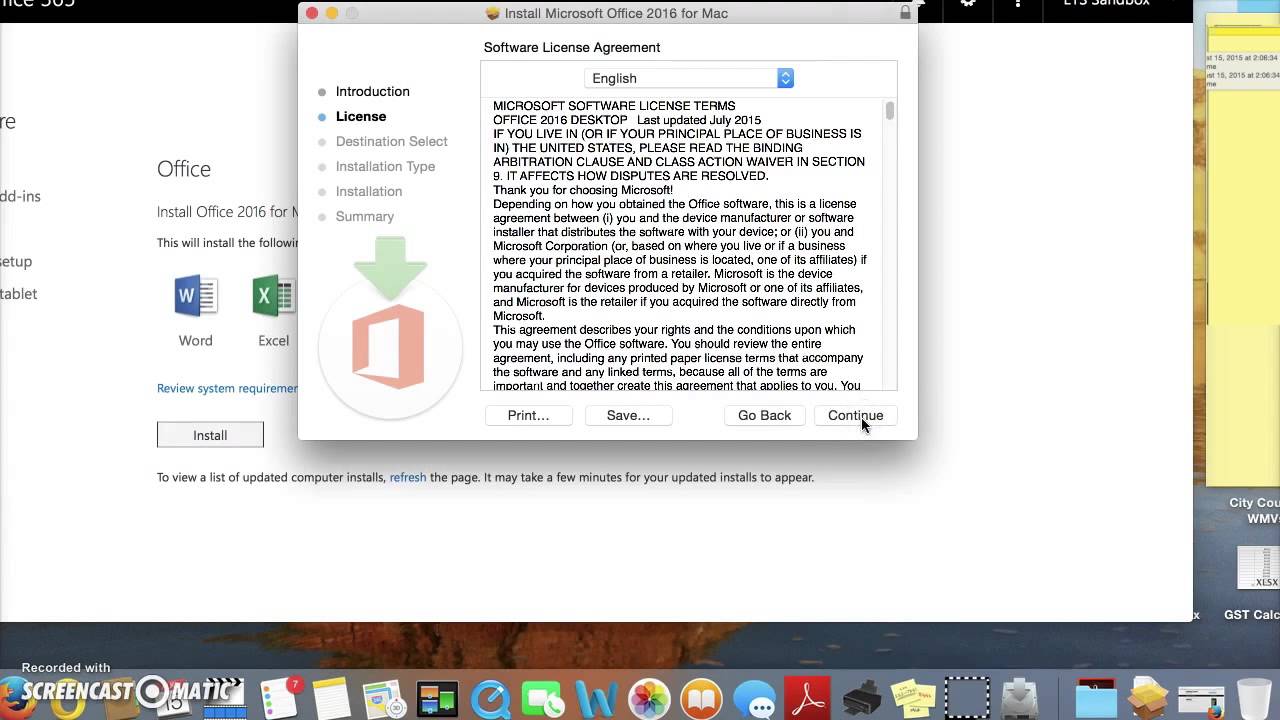
Step 4: Run the installer and follow instructions to install office 2016. If you see the User Account Control prompt that says, Do you want to allow this app to make changes to your device? Click Yes. Your install is finished when you see the phrase, 'You're all set! Office is installed now' and an animation plays to show you where to find Office applications on your computer.
Step 5: Cheers, your Office 2016 is completely installed and successfully activated now!
Symptoms
Microsoft Office Recovery. Microsoft Office 2010 keeps wanting to reinstall - posted in Windows 10 Support: Hello Running Win 10 from Win 7. I installed Microsoft Office 2010 over a year ago. If I go to open Microsoft Word. Uninstall any 32-bit versions of Office. See Uninstall or remove Office 2010. Make sure any 3rd-party Office add-ins that you rely on are stated as being Office 2010 and 64-bit compatible. Possible backward incompatibility is why, if in doubt, stay with the 32-bit version. Insert the Office 2010 installation disc.
When you start Microsoft Excel for Mac or try to open a new Excel workbook, you experience one of the following issues:
The program closes unexpectedly.
You receive an error message that resembles the following:
The application Microsoft Excel quit unexpectedly. Mac OS X and other applications are not affected. Click relaunch to launch the application again. Click report to see more details or send a report to Apple
Resolution
To resolve this problem, use one of the following methods, depending on your version of Office for Mac.
Excel 2016 for Mac
Step 1: Quit all programs and close all windows
On the Apple menu, click Force Quit.
Select an application in the 'Force Quit Applications' window.
Note You cannot quit Finder.Click Force Quit.
Repeat steps A through C for all the applications that are causing issues until you exit all active applications.
Step 2: Remove Excel preferences and Office settings
Make sure that all Microsoft Office for Mac programs are closed.
On the Go menu, open the root/hidden Library folder.
Note The Library folder is hidden in Mac OSX Yosemite. To display this folder, hold down the OPTION key while you click the Go menu.Open the Group Containers folder.
Look for a folder whose name ends '.Office,' and open it.
In this folder, look for the Com.microsoft.officeprefs.plist file.
Delete this file by dragging it to the trash. This will delete the Office preferences that you set during the initial start of the application.
Restart the application, and check whether the issue is resolved. If the issue is not resolved, delete the whole folder that you found in step D. This will delete all previous settings and preferences that were set across all applications.
Note This will reset Office back to the first-run phase of initial set up. It will also re-create a folder in the ~/Library/Group Containers location.

Step 3: Perform a clean restart
For information how to clean start your Operating system (OS), see the following Microsoft Knowledge Base article:
2398596 Perform a clean startup (safe mode) to determine whether background programs are interfering with Office for Mac
If the problem continues to occur, go to the next step.
Step 4: Remove and then reinstall Office
For information how to remove and then reinstall Office, see the following office website:
How to download and install or uninstall Office 2016 for Mac
If the issue continues to occur in safe mode, go to the next step.
Step 5: Use the 'Repair Disk Permissions' feature
Reinstall Office For Mac 2019
You can use the Repair Disk Permissions feature to troubleshoot permissions problems in Mac OS X 10.2 or later versions. To use the Repair Disk Permissions feature, follow these steps:
On the Go menu, click Utilities.
Start the Disk Utility program.
Click the primary hard disk drive for your computer.
On the First Aid tab, click Repair Disk Permissions.

Note The Disk Utility program repairs only software that is installed by Apple. This utility also repairs folders, such as the Applications folder. However, this utility does not repair software that is in your home folder. For more information about the Repair Disk Permissions feature, see the following AppleCare article:
About Disk Utility's Repair Disk Permissions feature
Excel for Mac 2011
Step 1: Quit all programs and close all windows

Reinstall Office For Mac
On the Apple menu, click Force Quit.
Select an application in the 'Force Quit Applications' window.
Note You cannot quit Finder.Click Force Quit.
Repeat steps A through C until you exit all active applications.
Step 2: Remove Excel preferences
Quit all Microsoft Office for Mac programs.
On the Go menu, click Home.
Open the Library folder.
Note The Library folder is hidden in MAC OS X Lion. To display this folder, hold down the OPTION key while you click the Go menu.Open the Preferences folder.
Click View, and then click Arrange by Name.
Look for a file that is named 'Com.microsoft.Excel.plist.'
Locate the file, move it to the desktop. If you cannot locate the file, the program is using the default preferences.
If you located the file and moved it to the desktop, start Microsoft Excel, and then check whether the problem still occurs. If the problem still occurs, quit Excel, and then restore the file to its original location. Then, go to the next step. If the problem seems to be resolved, you can move the Com.microsoft.Excel.plist file to the trash.
Quit all Microsoft Office for Mac programs.
On the Go menu, click Home.
Open the Library folder.
Note The Library folder is hidden in MAC OS X Lion. To display this folder, hold down the OPTION key while you click the Go menu.Open the Preferences folder.
Open the Microsoft folder.
Look for a file that is named 'Com.microsoft.Excel.prefs.plist.'
If you located the file, move it to the desktop. If you do not locate the file, the program is using the default preferences.
If you located the file and moved it to the desktop, start Excel, and check whether the problem still occurs. If the problem still occurs, quit Excel, and restore the file to its original location. Then, go to the next step. If the problem seems to be resolved, you can move the Com.microsoft.Excel.prefs.plist file to the trash.
Close all Microsoft Office applications.
On the Go menu, click Home.
Open the Library folder.
Note The Library folder is hidden in MAC OS X Lion. To display this folder, hold down the OPTION key while you click the Go menu.Open the Preferences folder.
Open the Microsoft Folder.
Open the Office 2011 folder.
Look for a file that is named Excel Toolbars (12)' or Microsoft Excel Toolbars. '
If you located the file, move it to the desktop. If you do not locate the file, the program is using the default preferences.
If you located the file and moved it to the desktop, start Excel, and then check whether the problem still occurs. If the problem still occurs, quit Excel, and restore the file to its original location. Then, go to the next step. If the problem seems to be resolved, you can move the toolbars file to the trash. If the problem continues to occur, go to the next step.
Step 3: Perform a clean restart
For information how to clean start your operating system, see the following Microsoft Knowledge Base article:
2398596 Perform a clean startup (safe mode) to determine whether background programs are interfering with Office for Mac
If the problem continues to occur, go to the next step.
Step 4: Remove and then reinstall Office
For information about how to remove and then reinstall Office, see the following Microsoft Knowledge Base article:
2398768 How to completely remove Office for Mac 2011
If the issue continues to occur in safe mode, go to the next step.
Step 5: Use the Repair Disk Permissions feature
You can use the Repair Disk Permissions feature to troubleshoot permissions problems in Mac OS X 10.2 or later versions. To use the Repair Disk Permissions feature, follow these steps:
On the Go menu, click Utilities.
Start the Disk Utility program.
Click the primary hard disk drive for your computer.
On the First Aid tab, click Repair Disk Permissions.
Note The Disk Utility program repairs only software that is installed by Apple. This utility also repairs folders, such as the Applications folder. However, this utility does not repair software that is in your home folder. For more information about the Repair Disk Permissions feature, see the following AppleCare article: